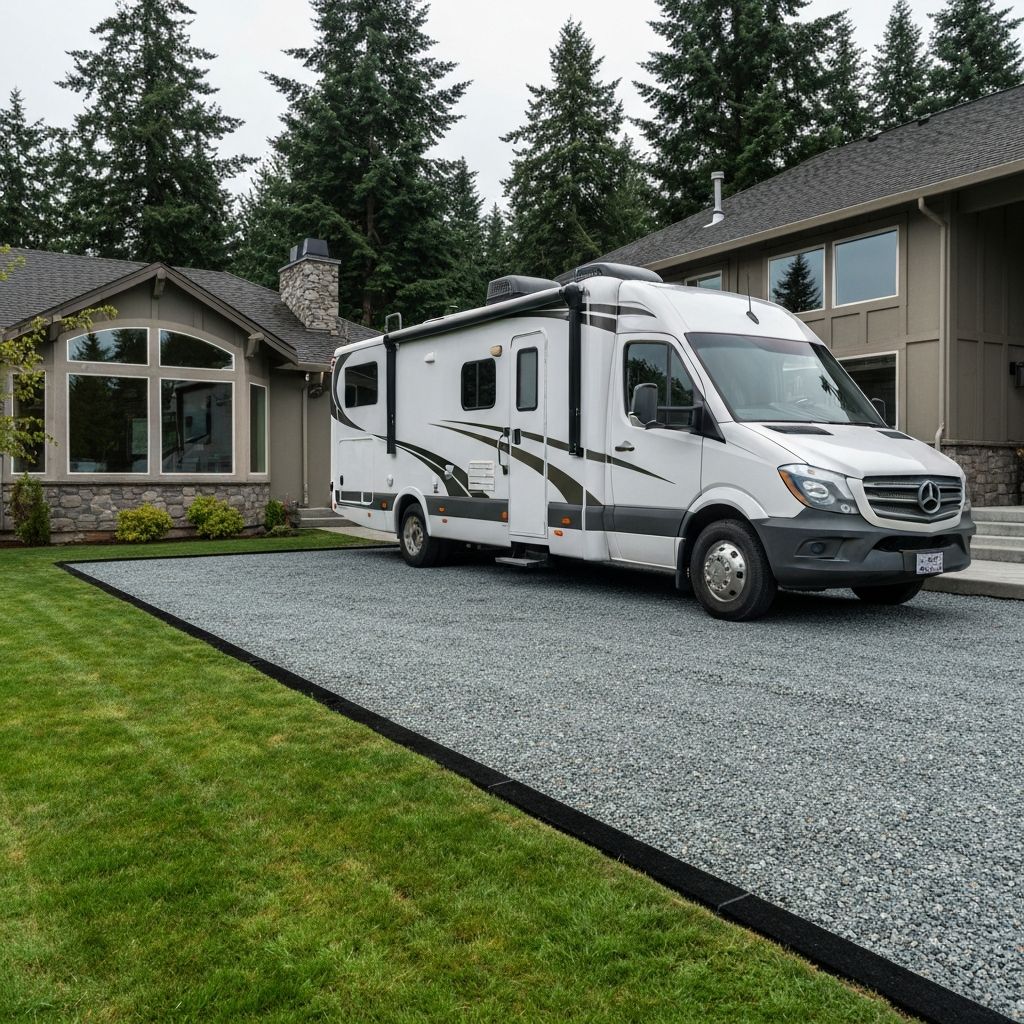
Why Kitsap County Homeowners Are Adding RV Pads
Kitsap County is a gateway to some of the Pacific Northwest's best outdoor destinations. With Olympic National Park, the Kitsap Peninsula's beaches, and the San Juan Islands ferry just a drive away, it is no surprise that RV ownership is booming in our area.
But storing an RV can be expensive. Monthly storage lots charge $100-$300+ per month, and many have long waitlists. That is why more homeowners in Bremerton, Silverdale, Poulsbo, Port Orchard, and Seabeck are investing in on-property RV parking pads. It is a one-time cost that eliminates monthly fees and keeps your RV accessible whenever you are ready to hit the road.
Planning Your RV Pad
Size Requirements
Class A motorhomes: 45 feet long x 12 feet wide minimum pad (plus maneuvering space)
Fifth wheels and travel trailers: 35-40 feet long x 12 feet wide
Smaller trailers and campers: 25-30 feet long x 10 feet wide
Always add 2-3 feet of extra width on each side for comfortable access
Kitsap County Regulations
Before breaking ground, check with your local jurisdiction:
Bremerton: RVs can be stored on residential property in side or rear yards
Silverdale (unincorporated Kitsap County): Generally permitted on residential lots with adequate setbacks
Poulsbo: Check city code for specific RV storage rules
HOA restrictions: Many neighborhoods have specific rules about RV parking and screening
Always verify current regulations with Kitsap County Development Services before starting your project.
Materials and Construction
Crushed Gravel (Most Popular)
Cost: $3,000-$8,000 depending on size
Crushed gravel is the most common and cost-effective choice for RV pads in Kitsap County. A proper installation includes:
Excavation to remove topsoil and reach stable subgrade (6-12 inches deep)
Geotextile fabric laid over the subgrade to prevent soil mixing with gravel
Base course of 4-6 inches of compacted crushed rock
Surface course of 2-3 inches of 3/4-inch minus crushed gravel, compacted
Edge restraints (black plastic or metal edging) to keep gravel contained
Concrete
Cost: $8,000-$15,000+
More expensive but extremely durable. Best for homeowners who want a permanent, low-maintenance surface. Requires proper subgrade preparation and reinforcement for heavy loads.
Pavers
Cost: $10,000-$20,000+
The premium option. Pavers offer excellent drainage, durability, and aesthetics. They can be repaired individually if damaged.
Critical: Drainage
This is where many DIY RV pad projects fail. A 45-foot RV pad creates a large impervious or semi-pervious surface that changes how water flows across your property. Without proper drainage:
- Water pools under or around your RV
- Runoff erodes neighboring lawn and garden areas
- Water flows toward your home's foundation
Every RV pad installation should include:
- A slight grade (1-2% slope) directing water away from structures
- Perimeter drainage (French drain or swale) to capture and redirect runoff
- Connection to your property's existing drainage system where possible
Why Hire a Professional
An RV pad seems straightforward, but proper excavation, grading, compaction, and drainage require equipment and expertise. Common DIY mistakes include:
- Insufficient excavation depth leading to sinking and rutting
- No geotextile fabric causing gravel to mix with soil and become muddy
- Poor drainage causing water pooling and property damage
- Uneven surfaces that make leveling your RV difficult
RV Pad Installation in Kitsap County
Pacific Landcare Group specializes in RV parking pad installation throughout Kitsap County. We handle the complete process: site evaluation, excavation, grading, drainage, material installation, and cleanup. Our team uses professional-grade equipment including mini excavators and plate compactors to ensure a pad that lasts.
Call (360) 232-6544 for a free on-site estimate. We will assess your property, discuss the best placement and materials, and provide a transparent quote with no surprises.